Wintering in Wales: Winter Challenges for the Caring Owner
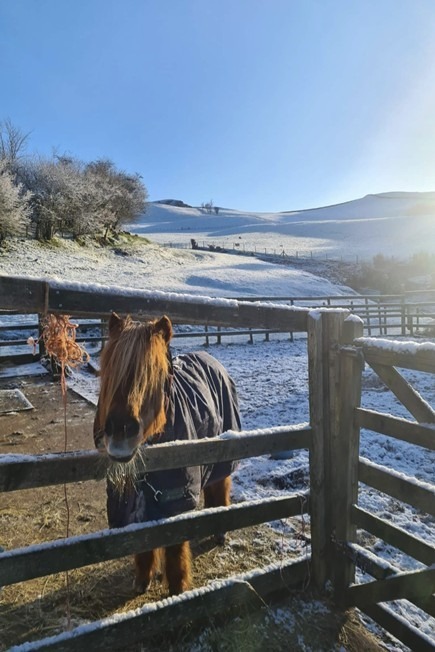
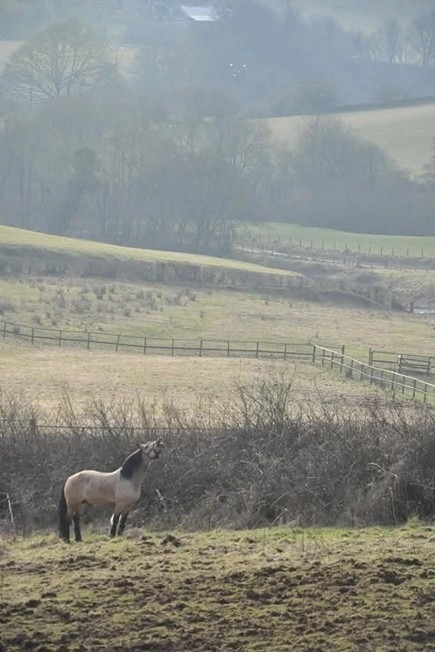
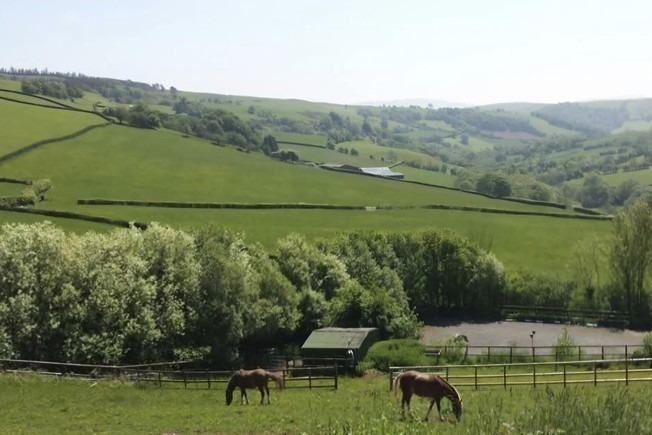
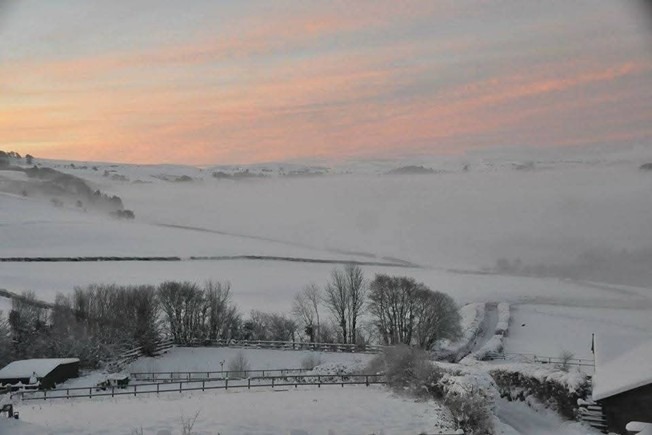
On the hills in Wales winter conditions start in November and often carry on into April. This makes seasonal challenges, especially when heavy rainfall has saturated the land. In these conditions grass is slow to recover even as daylight increases and temperatures slowly start to rise. Frequently the grazing on small fields has been badly stressed by any turnout and the ground has been churned to mud. The winds can still be bitterly cold, and it is much cooler here than in the lowlands and drier home counties. Mountain ponies move across a wide landscape to find forage, water and shelter but for the home-based owner’s horses this is not an option.
Many horse owners, like ourselves, prefer their equines, and especially natives like Welsh ponies, to enjoy turnout. But if we keep a horse of any kind in a restricted area like a field, we should be mindful of how we are limiting its natural survival options. If it can’t roam to find food and fresh water or to seek more sheltered, drier resting places, then we should accept our responsibilities.
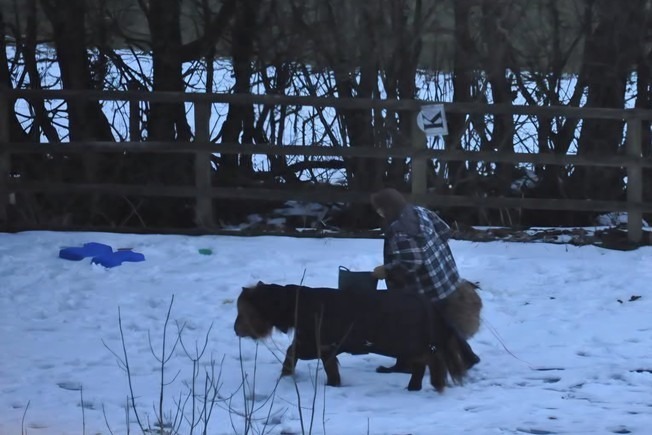
We live at 1000 feet up on the side on the Brecon Beacons. It is steep and remote. Our grazing does not have a stream or fresh water source, so providing constant clean unfrozen drinking water is a must. A pony drinks an estimated 5 litres per 100 litres bodyweight. That’s at least two big buckets a day, even in winter, and a lot of water to haul when hose systems become frozen. Outside taps need to be insulated and if they freeze then it’s a case of lugging water buckets through the house.
A common cause of colic in winter is lack of water intake leading to impaction, making this is literally a matter of life or death, so however wretched it is for the struggling horse owner, water must be supplied.
Trickle Feeders
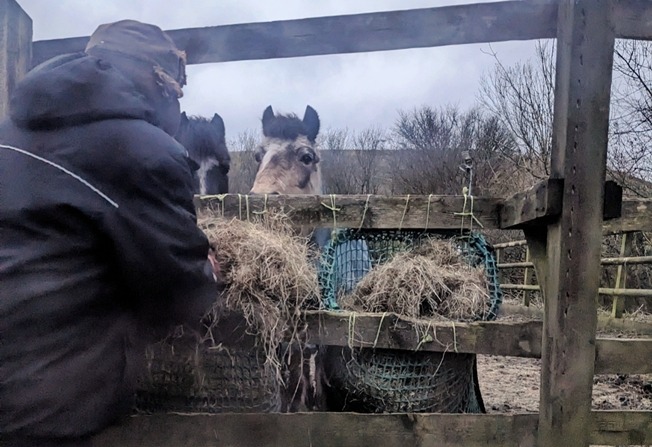
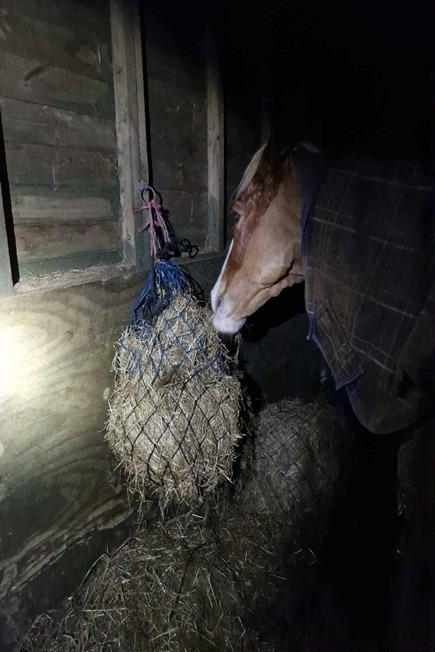
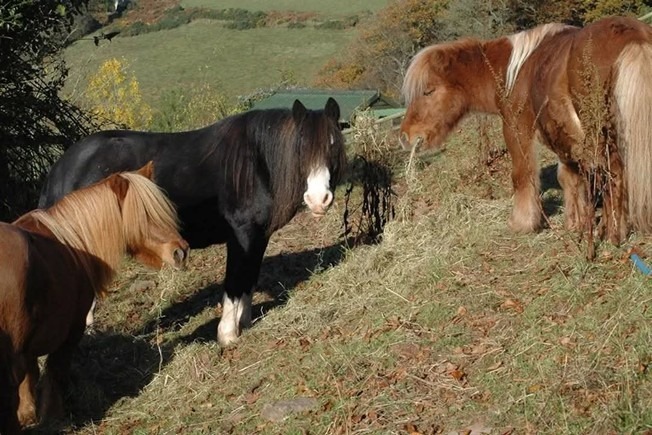
Horses have evolved as trickle feeders and need access to fibre throughout the 24 hours for their digestive system to work properly. Going without causes acids to build up, and so fibre needs to be given in a way that means it’s not all eaten quickly. Giving ad lib access to hay is considered best but should be modified for greedy ponies to avoid obesity. We use slow-release nets or feeders and often mix straw in.
There are many options and lots of information is available about winter feeding and watering, along with options for improving gateways and footing, especially now that keeping horses on a more natural track system is becoming popular. We aim to reduce the mud around feeding stations, water troughs and especially gateways. This is a priority to keep the fields accessible, especially as we will be leading horses and don’t want to get stuck! In Wales, traditional and plentiful materials like cut bracken and sheep fleeces are quick and easy solutions to muddy gateways while stone scrap from disused quarries is a more long lasting local resource
Challenging ground conditions
When a muddy area freezes the uneven ground is difficult to walk on and can cause muscle pulls and strains. Mud generally not only spoils grazing and can suck off horseshoes, but also causes mud fever which is a painful condition in the lower legs and might not be noticed while the legs are muddy. It is important to check legs, and dry bedding in the stable or field shelter helps to dry the mud quickly so that it is less damaging. It is wise to familiarise yourself with practical ways to reduce the risk of prolonged contact with mud and how to clean legs without aggravating the skin.
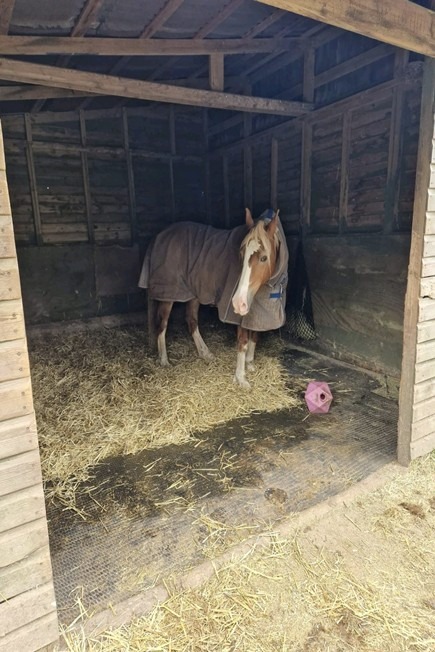
Mud mats are expensive but get good results. Having a turnout area that is mud free is ideal. Sand turnout pens, hardstanding like a concrete loafing area, especially just outside the field shelters and stables, work well and are easy enough to keep clean. Having the field sectioned so ideally, they are rotated and moved before the ground is stressed, can be achieved with good electric fencing. We use this all year to make a track system so that we can control grazing and encourage movement. We use lightweight stable mats on a concrete base inside each stable and the field shelters as this makes them easy to skip out and keep dry.
Having the choice whether to go in or out and to move around at will makes a tremendous impact on horse well-being. We all want our horses to be stress free and content.
Short days
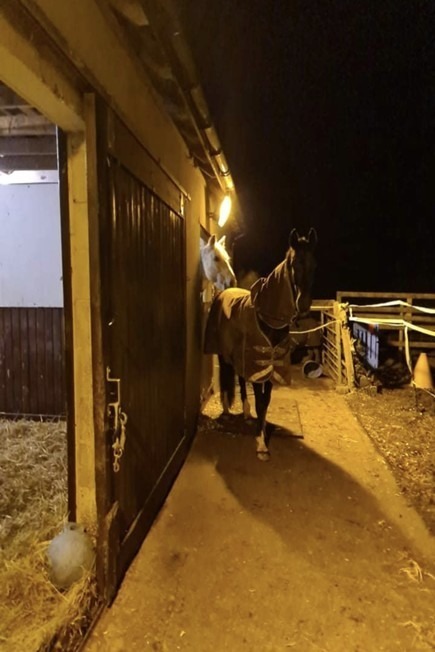
Winters have such a short amount of daylight. Solar powered lights can clip in place for dark morning and evening jobs, although battery charged head torches are a mainstay for all horse owners in winter.
Most horse owners in winter, and not only in Wales, might start to question their life choices! The glamorous image of the fit and toned equestrian sporting the best in horse wear is proved a fleeting mirage…..instead, with arm muscles to rival Popeye and a back bent by carrying buckets and shoving wheelbarrows, clad in many layers of soaking and mud spoilt clothing that fails to keep out the chill, plus icy frostbitten fingers… we struggle on, grateful if we can keep both wellies on, and wondering at every step if one boot will be sucked down in the quagmire and the frozen foot plunged into icy slurry. Snacks and cold coffee are poor fuel because keep going we must, imagining warm days and actually being able to ride or drive our ponies again.
Logistics expert
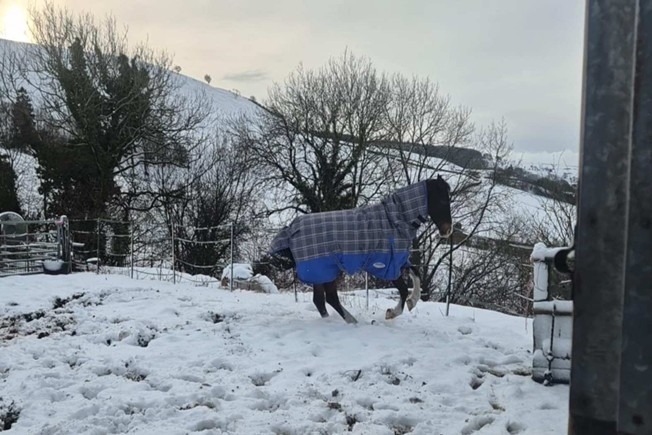
A horse owner becomes an expert at logistics. One challenge for us at home is we need to feed extra fibre every day and especially in winter our field becomes more of a means for exercise than grazing. Planning ahead is so important. We need to get in and store enough hay or haylage to keep supplies going in bad weather when we cannot get out safely. Our access is too steep and tight to get deliveries from suppliers, so we need to take our trailer, or failing that the pickup, to keep up with the constant demand for bales. In icy conditions we cannot safely even get our pickup out.
Supplementing fibre with essential vitamins and minerals though is easy from the excellent range available from specialist horse companies and we use a quality balancer bulked with some Speedibeet as individual feeds each day, tailored to each horse’s needs. We find a typical Welsh pony is best kept on low sugar forage and grazing, and very low sugar balanced feeds and a balancer like Lo Cal to avoid the risk of laminitis from richer pickings than they have evolved to manage. Although veterans, those with health issues and those working over winter need to receive their own tailored feeds
Health checks
To get the best from winter feeding it’s worth having a proper dental check and treatment before grazing declines and of course do ensure there is no worm burden.
Chilling wind and heavy rain are typical Welsh weather and while the mountain herds have their thick coats, even they seek shelter from the prevailing winds where possible, using terrain and vegetation. In a field the horse is restricted and if there is not an abundance of taller plants and hedging, then providing them with a field shelter (as discussed already) gives them somewhere out of the weather and is also appreciated to escape from summer heat.
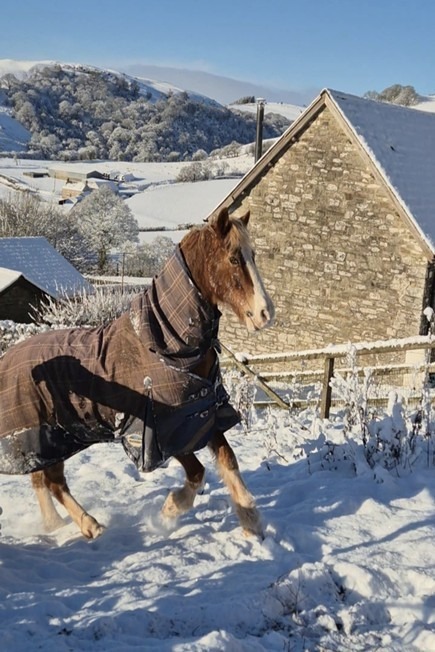
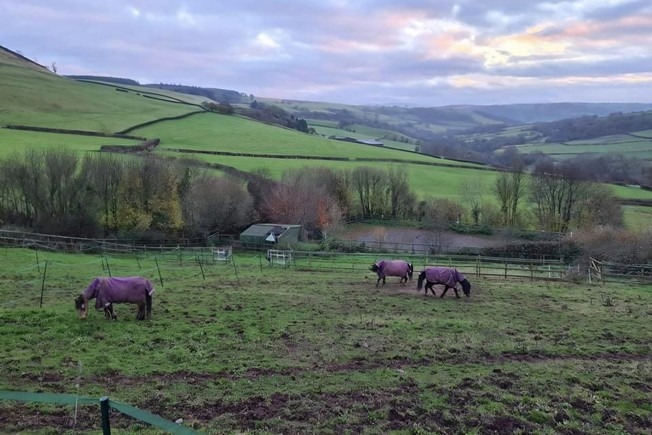
If your animal is clipped then an outdoor rug is needed and others, elderly ponies especially, may also benefit. Modern rugs are available in many weights and styles, and most are considered breathable. We should be prepared to change rugs as necessary and always base this on the horse’s comfort and not how cold we are feeling. Check daily to ensure each animal is a comfortable temperature and keeping healthy skin under the rug. Also be aware straps and buckles can get caught or come undone. A leg can be put through a strap when rolling. If a rugged horse doesn’t want to move it might well be caught up in some way and should be checked at once. However carefully you think you’ve fitted a rug, a pony, especially a mischievous active Welsh pony, will test you.
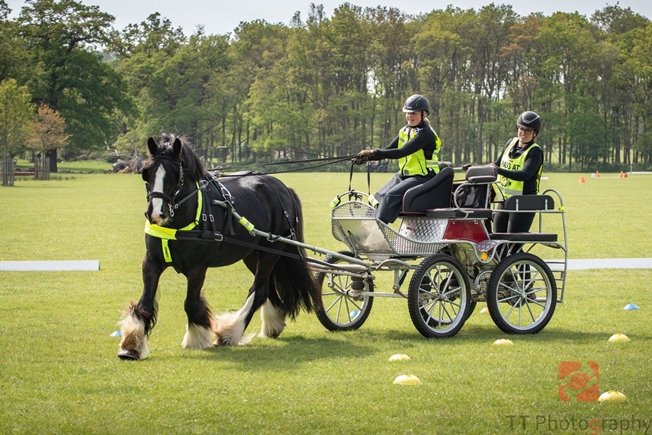
We have kept all the Welsh sections here as well as Shetlands, a Fell and an Andalusian horse. These are all hardy mountain breeds but more recently my two Dutch warmblood harness horses have joined us. They seem to enjoy the snow but have stables with access to turn out rather than living with a field shelter.
Finally, when you do need a vet, winter in Wales can provide that extra challenge. We check a vet coming up to us has a 4×4 vehicle and a phone with good signal reception in our area. This paid off one winter’s call out when our poor vet was stranded in his 4×4 two miles from us. The road was impassable with snow but often fallen trees or a mud slide can block narrow country lanes. So off to the rescue, heroic dad set out with the small quad across the fields and the poor vet had a very scenic but uncomfortable jolty ride here, perched on a cushion tied to the back rack. To make it more memorable, snow sprayed into every layer of clothing while he heroically clutched his bag of emergency vet gear. They arrived looking as if they were Shackleton’s crew. I’m not sure that a mug of hot cocoa and a tin of Heroes really made up for it!
A good Welsh vet though, like our native Welsh ponies, seems to cope well with the worst challenges of winter!