The Welsh Section D

This article continues for members only.
To gain full access to this feature and the whole The Carriage Commentator website, please sign up
The magnificent Welsh Section D, or Welsh Cob, is the largest of the four Welsh types. Like its smaller counterparts, it should have a pretty head with small ears and a powerful, compact body with sloping shoulders. Their natural strength is combined with knee-high leg action, hardiness and a willing temperament which makes them one of the most versatile ride and drive breeds.
Originating from the rugged mountain terrain of Wales, the breed developed as an all-round horse for heavy work around the homestead, as well as taking the family to market and for riding activities. They were popular in medieval times as ‘rounceys’ (war ponies) and then as cavalry horses for the British army, which is testament to their stamina, endurance, speed and courage – qualities that meant the army also used them in harness as gun teams and for pulling wagons.
A Section D’s sure-footedness helps them across country, especially in driving trials where they excel on the marathons. Naturally well balanced with good paces, they also do well in dressage and cones.
The Section D is especially famous for its explosive fast trot. Trotting races have been popular for centuries and require great endurance, covering many miles over hilly terrain. A typical race covered the 35 miles from Dowlais to Cardiff which can be done in under three hours!
Beechwood Bracken – or Alfie
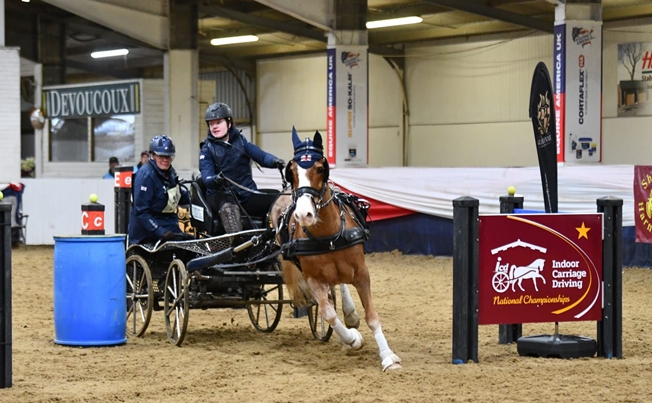
I have certainly enjoyed years of fun with my wonderful Welsh D Alfie (Beechwood Bracken). At 25 years old he is still up for any challenge and at the top of his game. Alfie has a typical Welsh Cob personality with lots of character, always full of energy and enthusiasm.
Alfie came to me from James Broome where he’d been used successfully in a pony pair. James was moving onto horse classes, so Alfie became available and was perfect for me as a young adult driving single in National Pony classes. In fact, we won our first event at St. Fort in Scotland and the following year we were Reserve National Intermediate Pony Champions, a whisker from winning the class.
Last year we competed at the FEI Para Driving World Championships in Lähden, Germany as despite his advancing years, Alife was in no way ready to retire. He shows no sign of slowing down and is as keen as ever. One of the best testimonials must be that the FEI vets queried his age and could not believe he was actually 24, thinking it must be a typo for 14! This year too he has been amazing at every event – whether indoor driving trials or outdoor nationals – he certainly is a great ambassador for the Welsh breed. Like many Ds, Alfie has turned his hoof successfully to ridden dressage and show jumping, as well as being a superb pony to hack or drive out in all seasons.
A number of years ago, I bought another young Section D stallion, Merlin, who was green under saddle and we broke him to drive. He took to it beautifully, with lovely groundwork and then was put in the carriage by Sonny Hiller. Sadly, my health rapidly deteriorated and rather than have him here as a companion pony the hard decision was made to rehome him. Initially he went to Fiona and Roger Clark in Suffolk where he was regularly ridden and driven for a number of years. Then, after Roger’s health declined, he went to Danielle Richardson to be used in ridden showing and in-hand classes at the top level.
Danielle Richardson ended up buying Merlin eight years ago as a ride and drive pony, and as a keen ridden showing enthusiast she was excited to see what he could achieve, and he has more than exceeded our expectations. His successes include winning a bronze medal under saddle, along with numerous top placings at county shows across the country.
Merlin is a true all-rounder and an enormous amount of fun. Alongside competing, he loves nothing more than a gallop along the beach, a relaxing hack, or a fun ride around Somerford Park Farm. In particular, he has thoroughly enjoyed his appearances in the main ring at The Royal Welsh Show, competing in the Senior Section D class. His calm, mannerly performance in such a phenomenal atmosphere has often drawn praise and admiration.
Merlin has been a horse for the whole family to enjoy, frequently hacking out alongside a Traditional Cob stallion that is ridden by Danielle’s mother. He is full of character, and is mischievous and cheeky at times, showing the ‘Welsh dragon’ spirit. Yet beneath it, he has a heart of gold and is a wonderfully versatile horse.
When he was with the Clarks, he was driving single, pair and in a team, and they did something with him every day, be it ridden or driven. This included going hunting then to the pub and drinking the ‘slops’ – he still enjoys a cheeky Guinness!
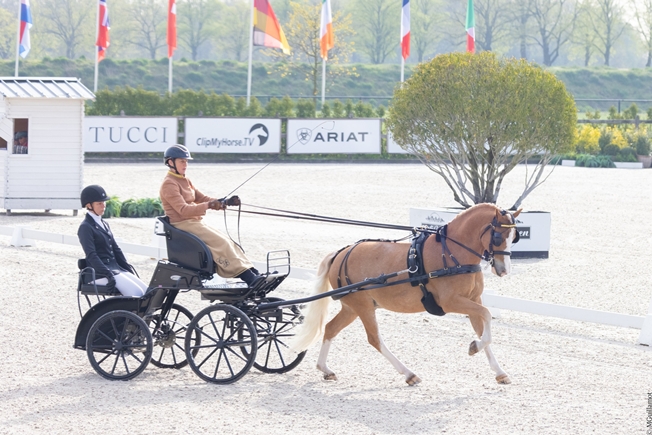
Welsh Section Ds have been successful in driven showing classes for a long time and have consistently won at the highest level, including at the Horse of the Year Show, such as the 2025 winner and 2026 runner up, Hatterall All Gold, the palomino Section D stallion driven by Kelly Searle and owned by the Dudley Apicella family. Over the years, a high percentage of the finalists at HOYS and showing national champions have been either pure or part bred Welsh Cobs.
From the Welsh Pony & Cob Society website –
History
From references in early Welsh literature, it appears that the Welsh Cob had been established and was recognised as a breed by the 15th Century. They were the used as draft horse and family transport, because of their strength and endurance capabilities throughout the ensuing centuries up to the advent of motor cars and tractors. From the inception of the Welsh Pony & Cob Society Stud Book in 1901, the description of the Welsh Cob has changed little, although the upper and lower height limits have varied, from a minimum of 14.2hh to a maximum of 15.2hh and by 1950 this had been refined to a minimum height of 13.2hh and no upper height limit. More recently, as the demand for horses as draft animals and as transport declined, the Welsh Cob’s aptitude as a family equine has been realised – quiet enough for the younger members of the family to ride, but equally capable of carrying an adult and being used for a variety of performance tasks.
Uses
Aptly described as the ‘best ride and drive animal in the World’, the Welsh Cob has become famous for its courage, tractability and endurance. The Breed Characteristics of a deep body, strong limbs and straight, free and powerful action mean that the Welsh Cob is a very versatile animal and is popular as a hunter, in harness and in performance spheres equally. In recent years, Welsh Cobs have had great success in the international driving world, and indeed their full potential has now been recognised all over the world.