Sylvia Brocklebank Part 2
This article continues for members only.
To gain full access to this feature and the whole The Carriage Commentator website, please sign up
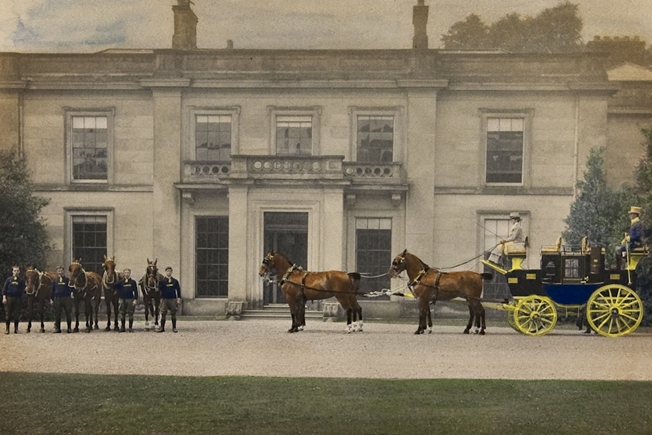
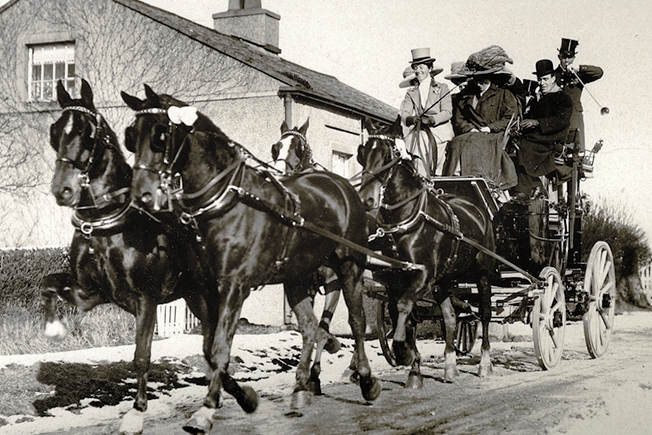
Throughout her driving career, Sylvia Brocklebank championed the Hackney horse, which tended to be the breed of choice for coachmen of that era, and she also bred them herself. In the early days of her coaching, if not using the family horses, she would borrow or hire a team which was a common practice at that time, with yards being devoted to the hiring out of their horses. As she became increasingly competitive she would tour the country purchasing horses from auctions or dealers, constantly improving and changing her teams around. Rarely did one of her teams stay the same from one season to the next and horses were readily traded on. She soon found her trademark colour of bay which she became associated with, and although she did use a mixed team with her Road Coach, it was fashionable at the time, particularly with Drag teams, to adhere to your chosen horse colour. Elsewhere, the equally successful female whip, Miss Ella Ross of Manchester, who worked with Bertram Mills, always had black Hackneys; Sir Edward Stern drove his homebred roan Hackneys and Miss Dora Schintz of Liverpool stuck to rich mahogany chestnuts.
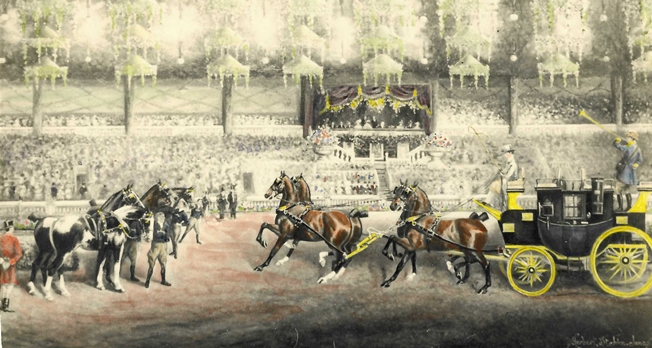
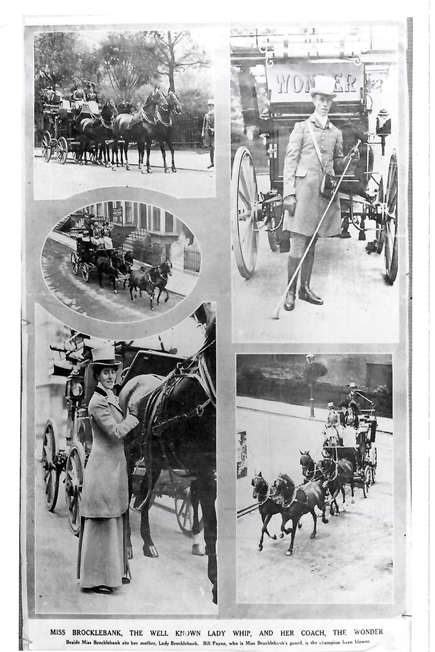
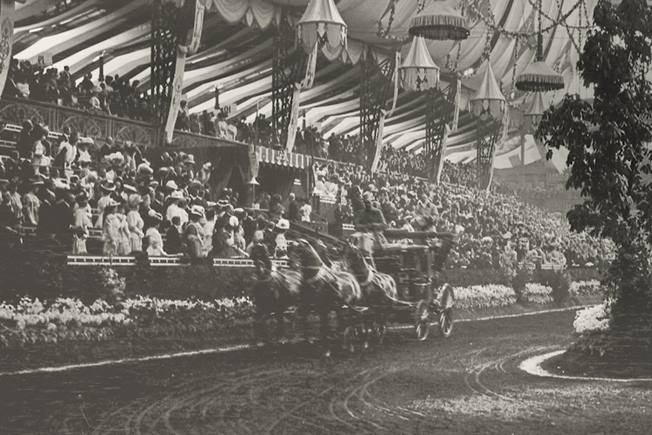
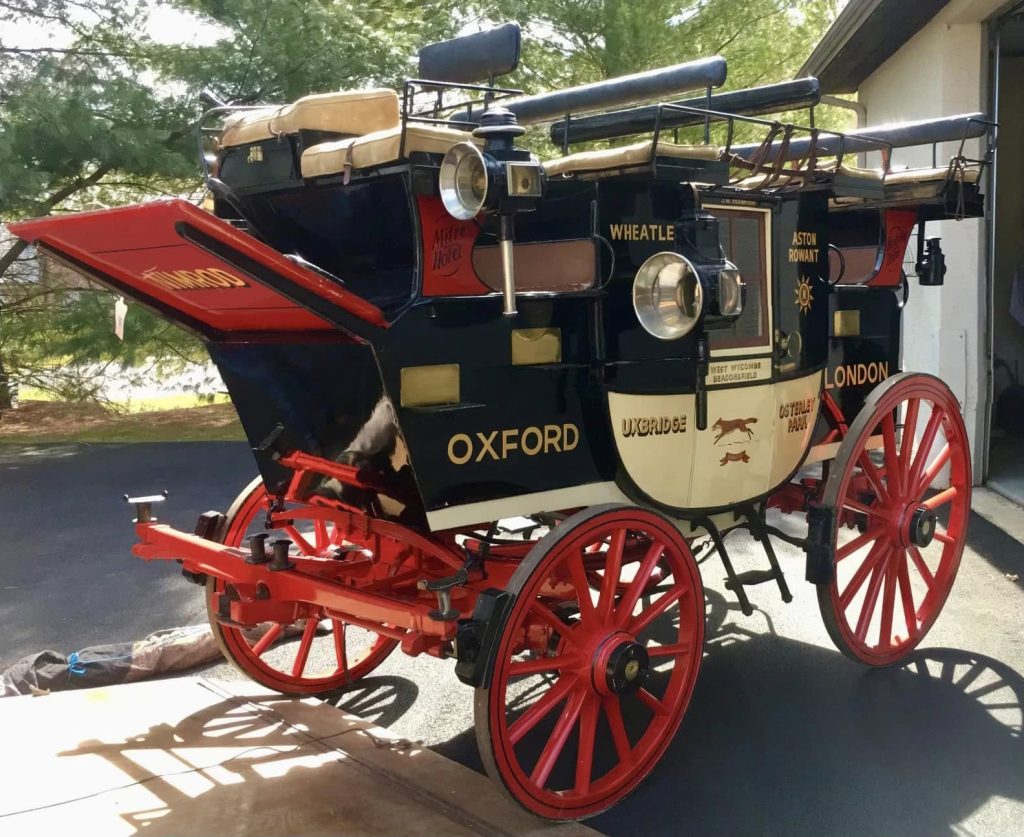
In the early days of her coaching career, either Sylvia, the family or a friend would hire a coach, but in 1906 she purchased her first coach, a Drag by the ‘best maker’ Holland and Holland. In 1908, in order to compete in the new Quick Change competition at Olympia – a highlight of her career – she commissioned a Road Coach by Shanks which she named the ‘Wonder’.
The Brocklebank family were based at Irton Hall in West Cumberland although they had another house in Woolton, Merseyside, to be near the family business in Liverpool. After her father Sir John Brocklebank died in 1911, an event which evoked a year of mourning and dampened her equestrian activities, Sylvia and her mother moved to Allexton Hall in Leicestershire. Two years later Agnes died, and Sylvia purchased Wing Grange near Oakham in Leicestershire, which was to remain her base until her death. Not long after the move to Wing Grange, war broke out and Sylvia was recruited by her neighbour, the Marchioness of Londonderry, to become involved in the Women’s Legion (a precursor to the Women’s Land Army) with the specific role of organising the agricultural section. With a remit to raise funds, she called on her wealthy Westinghouse in-laws, and then oversaw the purchase of tractors and equipment to help farming to continue. In recognition of her contribution, Sylvia was awarded an OBE in 1920.
Although the war years curtailed much coaching activity, particularly as so many horses had been requisitioned, Sylvia continued to compete until she retired from driving in 1921. It was with typical pragmatism and an apparent lack of too much sentimentality that she gave up. Perhaps she felt she had achieved all she could with her horses, or perhaps the world was too changed a place after the war – she would have been grieving the loss of many friends, not least her cousin Ronald (my great grandfather), and her parents. Her sister, who was a close companion, was by this time settled into a new life in the USA. Also, interest in coaching had waned somewhat and although it now seems hard to believe, it took some time for her to sell the coaches. The Drag was purchased to help advertise ‘Walker’s Warrington Ales’ in the north of England, and its fate thereafter was hazy until in 1976 it was found via a newspaper article to have been purchased by a Mrs Draper from a former coachman to a Lord Mayor of Liverpool.
The fate of her Wonder was more illustrious. It remained with Sylvia until 1928 when Claude Goddard purchased it after placing a ‘wanted’ advert in ‘The Field’. In partnership with Mr H J Colebrook, the coach ran as a second ‘Tally-Ho’ on the London to Oxford road. In 1930, the partnership was dissolved and after the toss of a coin, Mr Colebrook was left with Sylvia’s coach, which he renamed ‘Nimrod’, and had Cecil Aldin paint foxes on the door panels and a hound on the rear boot panel. He showed it with great success in the 1930’s with a team of chestnut Norfolk Hackneys, and in 1961, sold all his carriages to a Californian purchaser. It was then sold to Jack Seabrook of New Jersey, who enjoyed more success with it and at his 2005 dispersal sale, was purchased for $190,000 by Lou Piancone. It was sold again by Martins Auctioneers in autumn 2021 for $95,000.
Having moved away from her coaching life, Sylvia remained active and started breeding Shorthorn cattle, establishing a herd at Wing Grange. Ever the perfectionist, she was as successful in the show ring with her cattle as she had been with her horses. Her considerable energy was also put into the community, and she became a justice of the peace in 1924, a leading light in the Women’s Institute and was the first lady to be elected to the Hackney Horse Society Council. She judged all over the country, including at Olympia for four successive years and died in November 1962, aged 80.
Since this article was published on The CC in January 2022, the Wonder Road Coach, renamed Nimrod, was purchased by Allen Tucci when it was sold in March 2023 at a Martin’s Auction in the USA. The below is from the Facebook post which appeared on Allen’s Murder Hollow page –