High Flyer Phaeton
This article continues for members only.
To gain full access to this feature and the whole The Carriage Commentator website, please sign up
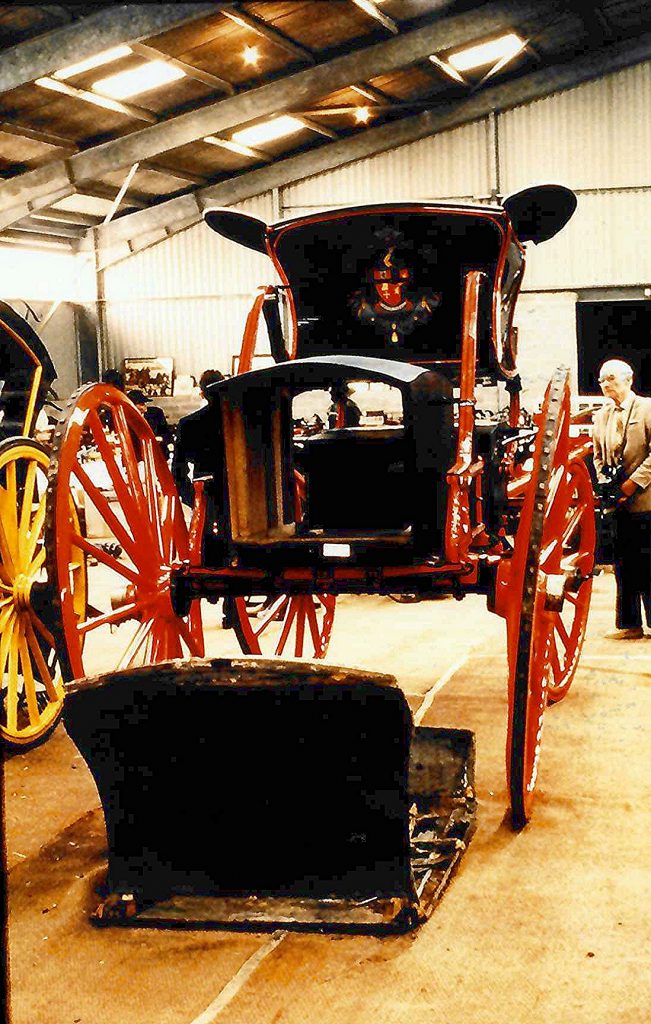
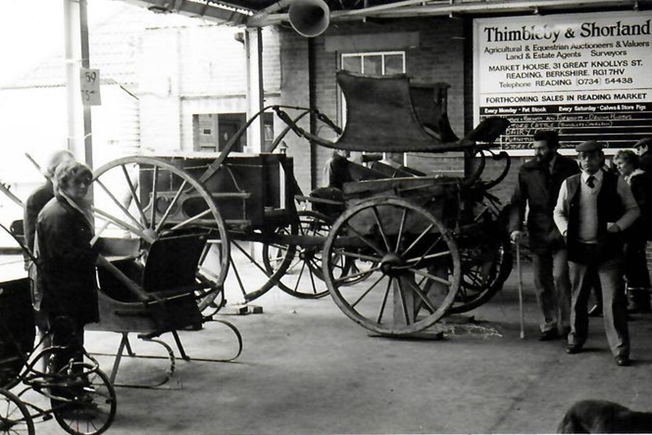
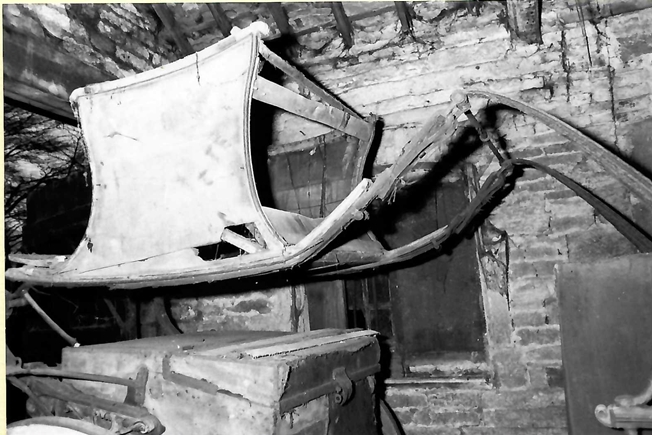
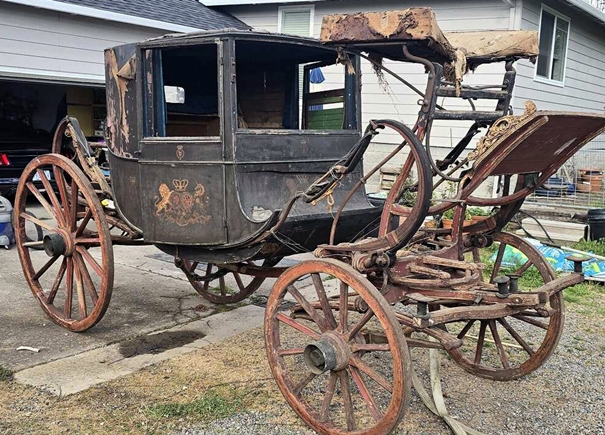
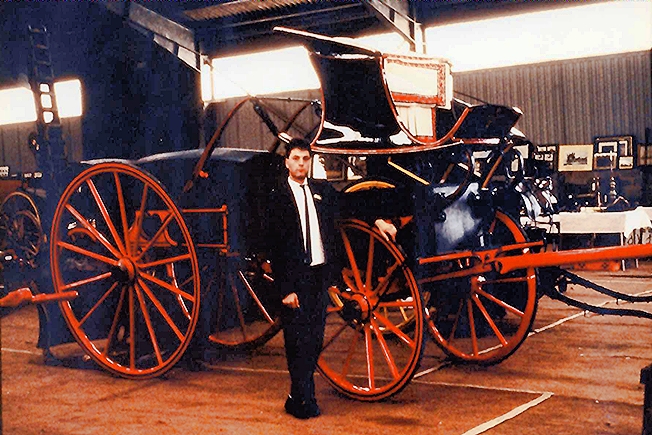
Prompted by a recent photo on Facebook posted by John Stallard of the Carriage Museum of America showing the rather dilapidated High Flyer Phaeton sitting in Reading Market in 1983, Sarah delved into the archives. Our grateful thanks to Colin Henderson from the Carriage Foundation for his contribution – December 2020
THE ARMYTAGE HIGH FLYER PHAETON
The Armytage family of Kirklees Hall in Clifton, Yorkshire have long been associated with the history of carriage driving. The family were the owners of two of the most famous 18th-century phaetons, both of which were sold through Thimbleby & Shorland auctions. Another Armytage, Lt. Col. Henry, was a founder member and first secretary of the Coaching Club in 1871, serving alongside first president The Duke of Beaufort and Lord Carington, the vice president.
While running the carriage sales, I handled the sale of the smaller ‘Crane Neck Phaeton’ and acted on behalf of the Armytage family who were the vendors. For some years this pretty and unique vehicle had been on display in the Science Museum in Kensington, but by the time I met it again it was in storage in one of the museum’s hangers in Wroughton, near Swindon. I distinctly remember relishing the trip north to go to a lovely part of Yorkshire to meet the then Lady Armytage to discuss the sale. It was also during that trip that I called in to see Elizabeth Shaw in Richmond whose late father George had amassed one of the country’s largest collections of carriages, and the three dispersal auctions that arose from that visit certainly were a high point in my career. In fact, in was a highly worthwhile trip all round!
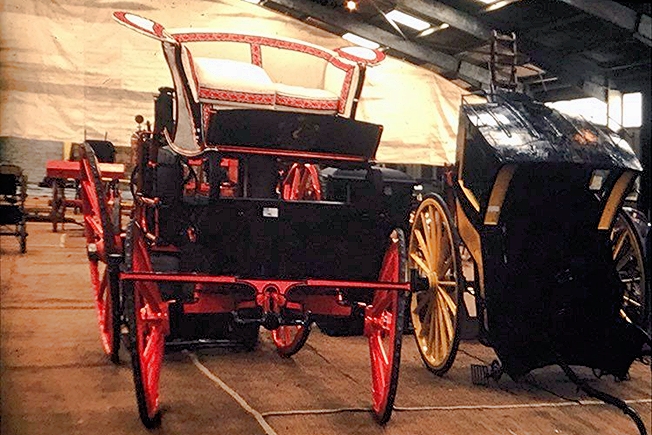
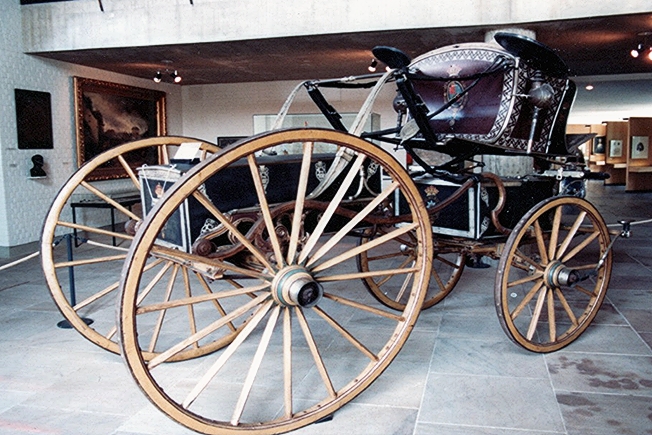
A few months later Nick and Jane Wood of Fairbourne Carriages bought the phaeton at the auction in Reading and it ended up in the Metz collection in Germany. I’ll write in more detail about it another time as it was the companion carriage to the much larger ‘High Flyer Phaeton’ which was built for the Armytage family in the late 18th-century.
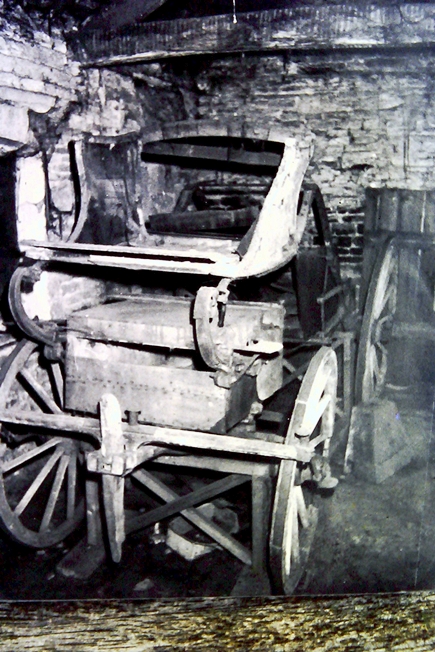
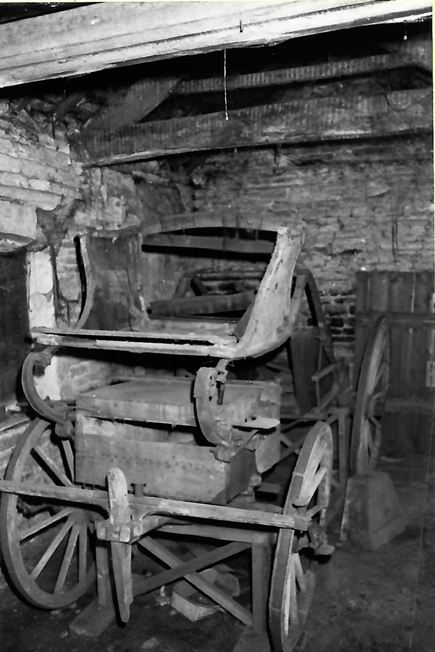
It was during my first trip to Suffolk to stay with John and Sue Mauger as part of my training that our evenings were spent going through John’s enormous slide collection. One set of slides that stood out were those of the High Flyer Phaeton, and the story of how it had been found by two decorators at the Armytage property and bought for a song after the auctioneers Phillips had failed to realise its value and importance, really chimed. That it ended up being offered again at a Phillips sale a few years later after costing a small fortune to restore, seemed ironic.
The phaeton was offered for sale in Reading on Wednesday 2nd March 1983, lot 61. John’s catalogue description read as follows:
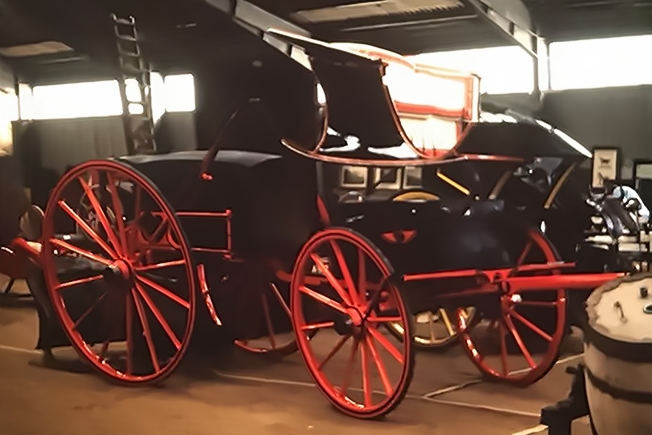
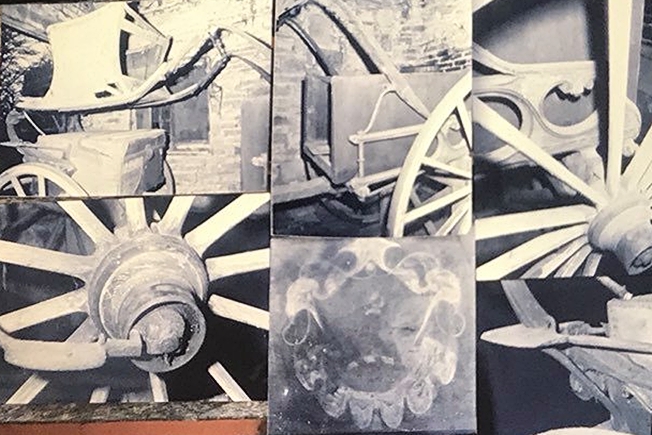
HIGH FLYER PHAETON of great rarity and antiquity, though to be 18th century. It has come direct from Sir John Armitage’s (sic) country seat, Kirklees Hall in Yorkshire, and is very similar to the phaeton in the Science Museum, attributed to Sir George Armitage 1770. The body is suspended very high on leather braces from whip springs at the rear – the top of the springs being about 7ft from the ground – and the rear wheels are about 67” dia, the wheels having “strake tires”, which were used prior to the introduction of hoop irons. Although much timber is decayed, the main structural parts, including axles, perch and the superb carvings & mouldings, are still hard & sound. There is evidence of a folding head and the Armitage family crest can be seen in the old paintwork. This is undoubtedly the oldest vehicle to come to the Reading sales and bears a likeness to the High Flyer Phaeton of the Prince of Wales, later George IV, in the famous painting by George Stubbs.
Knowing that I was going to Yorkshire to meet Lady Armytage, John went through his records and sent over the following information, regarding the father and son who had purchased the carriage from the family:
The Ramdsens (father and son) had asked to buy the phaeton while decorating the interior of the house at Kirklees, and Phillips (the auction house) were called in by Lady Armytage to value it and they told her that it wasn’t worth anything! The Ramsdens paid £400 for the phaeton and a nice little sleigh and I went up to the hall to inspect them, being pretty sure I was going to find the ‘High Flyer Phaeton’ (otherwise known as Perch High or High Perch Phaeton) from the sketch they had drawn me. IT WAS, and I sold them both at the March 1983 sale, within four weeks, the phaeton making £16,500 (reserve £3,000, I had valued it at £4,500-10,000, having never sold anything like it or as old before, even though it was very rotten.)
I wish that John and Robin Clathworthy were both still around to remind me of the full facts of that sale. Robin might well have been the one to purchase it – he certainly had a lot to do with it – and it ended up in the hands of a Ken Jones, who owned a seal sanctuary in Cornwall. It was expensively restored, supposedly at a cost of about £25-30,000 and came onto the market again in 1987, when Mr Jones had a forced dispersal sale, ironically held by Phillips. It failed to meet its reserve of £12,000 that day.
In the same correspondence, John also sent over an extract from ‘Country Life’ dated 22nd August 1908 called ‘Sir George Armytage’s Phaetons’:
Like so much else at Kirklees they tell of long descent in one line, of permanent ownership and of the preservation of the odd-and-end possessions of previous generations. On one of them is a coat of arms whereon Armytage impales Harbord. They were, therefore, the travelling carriages of the bride and bridegroom who came home to the finished house in 1783, for the fourth baronet married a daughter of the latter family. In a 1791 print of a race meeting on Newmarket Heath a quite similar vehicle may be seen. The ample stowage room in the large, attached boxes would make such a carriage convenient not only for ordinary travelling, but for attending picnics and sporting fixtures. Evidence that the third baronet indulged in all forms of sport fashionable in this day survives in the bags for fighting cocks.
Colin Henderson of the Carriage Foundation adds –
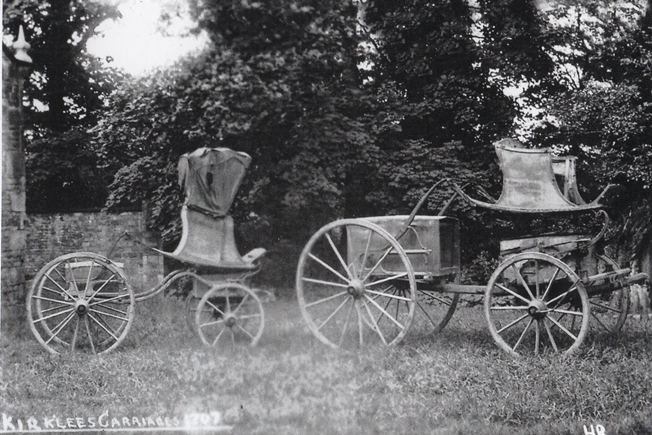
In 1940 Sir George Armytage wrote about the two phaetons that were in his family, enclosing a black and white photograph of the two carriages standing in a paddock at Kirklees Park, the family home (illustrated).
Previous to this, in 1939, the Science Museum in London had shown great interest in the two 18th-century High Flyer Phaetons, which are very aptly described in Felton’s book on carriage building and construction. The carriages were brought to London for a full assessment and loan. What was clear was that the larger and more impressive of the two was in a very dilapidated state. Thus, because of museum budgets, it was decided to carry out maintenance work on the smaller of the two, a Crane Neck Phaeton, ready for the loan and display in the Science Museum.
The repair work to the smaller phaeton included; repairing the wheels as many of the felloes had woodworm; making a new door, copying the door on the off-side; renewing all leather work to include a new front driving apron; cleaning up all iron work and giving a coat of preserving paint; painting all new timber and touching up existing to match all paintwork throughout.
This work on the smaller Crane Neck Phaeton was carried out T Walland of Esher, who had also worked on the Science Museum’s Britschka. The work was completed two months after the outbreak of World War II. In the distribution of artifacts from the Museum, the larger, straight perched phaeton was returned to Kirklees Park.
The history attached to these two phaetons comes from the Armytage family. The family had suggested a date of about 1758, during the reign of George II, that the carriages had been acquired. But this would be too early in date for this style of phaeton, which first appeared in the 1770’s and is described and illustrated in Felton’s book of 1794. In 1783 the fourth baronet married a member of the Harbord family. The dowry enabled the house at Kirklees to be remodeled while they were on their honeymoon, indicating a new and fresh start. These are sporting carriages, and the discovery of bags for travelling fighting cocks, found in the boot, tells its own story. The phaetons are two different sizes; the larger of the two and probably ‘the gentleman’s’, has rear wheels of 5ft. 6inches and fourteen spokes. The smaller and probably ‘the ladies’ phaeton has rear wheels of 4ft. 2inches and twelve spokes. The ironwork is stamped ‘Outridge’, a common name found on several late eighteenth century carriages.
Kirklees Park was sold off in the 1980’s and both carriages went on to find new homes in Europe. The large High Flyer Phaeton forms part of Jan de Clerck’s collection in Belgium and the smaller Crane Neck Phaeton became part of Jorg Metz collection in Germany. Both carriages have been restored and are treasured.
The finest example of an 18th-century High Flyer Phaeton is to be found in Hanover. This carriage, complete with its original team harness, belonged to the Duke of Kent, the younger brother of George IV, and father of Queen Victoria.