AIAT International Conference 2026
This article continues for members only.
To gain full access to this feature and the whole The Carriage Commentator website, please sign up
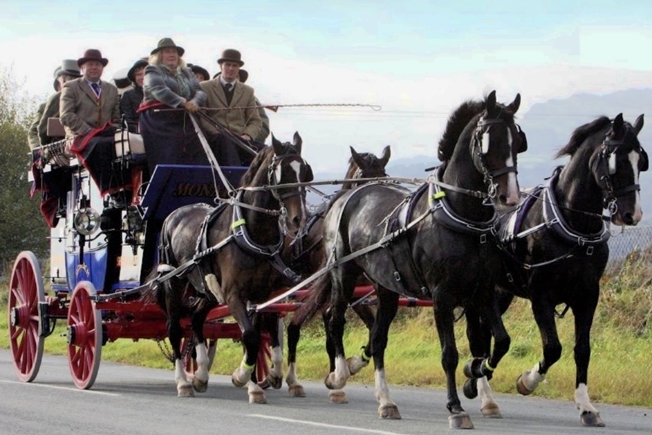
The Association Internationale d’Attelage de Tradition was founded in 2008 in France by Baron Christian de Langlade and his wife Antoinette. Under their leadership, the organisation grew immeasurably and is represented in most of Europe and North America. Nearly 30 years later, it remains true to its origins to promote elegant driving using traditional carriages, ideally built pre-1945. Although it’s not a membership-based organisation, each associated nation pays a stipend to the headquarters. There are country chairs, directors and committees plus approved judges and technical delegates. Events need to be self-funding and are usually underwritten by the organisers themselves. There’s a great deal of good will and somehow, it all seems to work very well.
Last year there was a sea change as the de Langlades handed over leadership duties to Jose Juan Morales Fernandez who became international chair and Raimundo Coral Rubiales who became treasurer – both are from Spain which has a rich AIAT tradition and dedicated following. Joining them on the international committee is the UK’s Richard Lanni who organises Glamis and Beamish CIATs, Dr Tadeusz Kolacz from Poland and one of the founding figures, Dorothea von Eberhardt from Germany. Dodo is an old friend of the de Langlades, and with her maternal, sunny outlook and linguistic talents, is a tactful, bonding figurehead who makes everyone feel included.
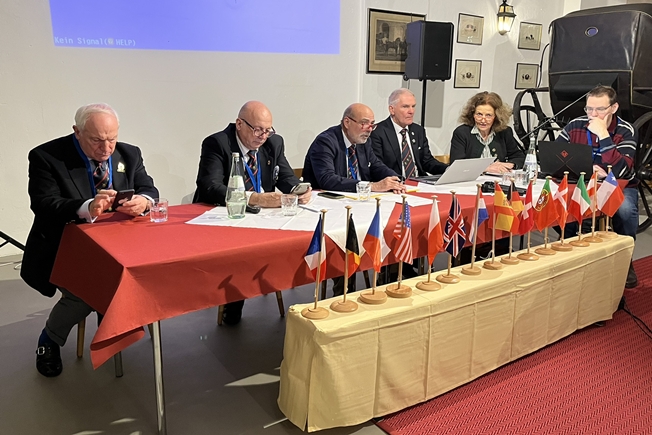
One of the highlights of being associated with the AIAT organisation is the annual international conference. It’s usually rather a glamorous gathering held over a weekend in late winter at a destination in Europe. Officials are supposed to attend and it’s a way of consolidating the network while standard setting and tactfully ensuring that everyone is on the same page.
This year the Germans, led by Josef Steigenberger, were in charge and we were invited to travel to Mannheim. What lured the majority of delegates was the chance to spend most of the conference amidst the Scheidel collection, making impossible to resist. Thankfully this year it didn’t clash with the FEI Driving World Cup final, as it has done for the last two years.
Country chairs must sign off on who can attend and once travel plans are ratified, and journeys undertaken, it’s a well-polished format that works well. The clans gather, greetings are made and the Friday night is quite informal. Saturday follows with a visit somewhere special then there’s the gala dinner. On Sunday, the judges’ clinic takes place where anywhere between five and ten different turnouts are assessed, followed by discussion back in the conference area. The last phase is the AGM for country chairs and they are able to take along another official from their national delegation.
Naturally, a change in leadership after so long, especially after Christan and Antoinette had such a clear vision of how AIAT should be run, can be tricky but the organisation seems to have seamlessly maintained the international goodwill and traditional ethos on which it was founded. It was great to hear that there will be in the region of 40 CIAT events this year, plus another 40 or so smaller training or CAT (national) events.
How a turnout is judged and what is deemed acceptable, good, bad or indifferent is an ongoing debate. During the first, presentation phase there’s not much time for a judge to assess the five categories on a judging sheet and especially with a more complex or multiple turnout, so this must be done made efficiently. Being encouraging and courteous as a judge is a given, but there’s an unwritten rule that marks shouldn’t stray under 12 out of 20, unless something is very wrong.
At previous conferences, during the judges’ clinic, each judge has had to submit their marking sheets and then they’ve been displayed on a big screen afterwards, sometimes in blocks of red if they are overly high or low. It can be an intimidating process, and individuals were asked to justify, in front of everyone, why they’ve done what they’ve done. While standards must be maintained, it was both rigorous and potentially quite nerve-wracking.
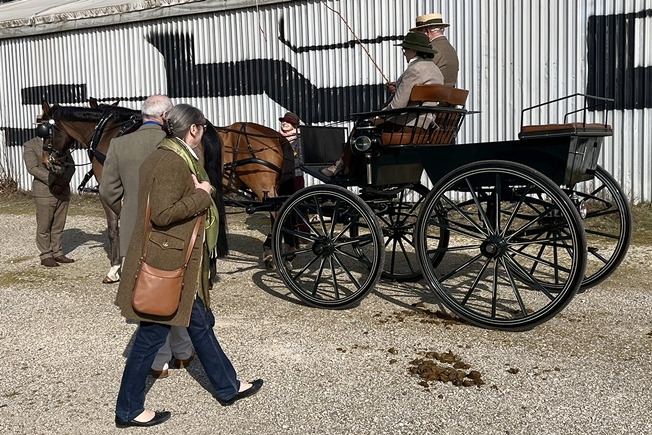
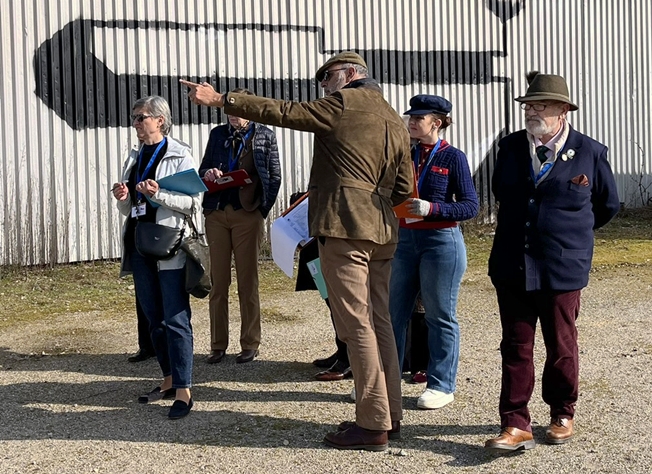
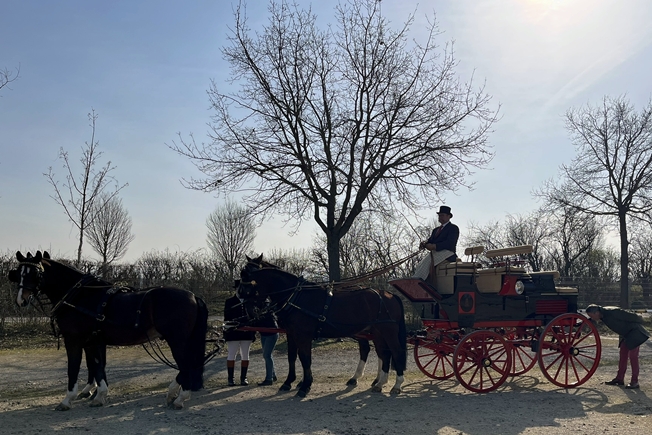
This year, a slightly gentler approach was taken. The judges were divided into five groups, under the leadership of a more senior judge, and then marks and comments were discussed and agreed upon as a group and one marking sheet was submitted. Being with a like-minded cohort was reassuring and we all bounced off each other, spotting different faults or plus points, and it worked well. Five different turnouts gamely came forward – three pairs and two teams – and there was plenty to discuss.
One aspect we are reminded to consider is national differences and standards, and we are encouraged to remain open minded. To the British eye, the use of full collars with swingletrees seems odd, especially when there’s a splinter bar with roller bolts in place, but on the Continent it’s acceptable. We dialled down on the details of dress and finish, and as usual, it was the harness that threw up the most discussion points and errors.
Once this side of it had finished, we reconvened at the Scheidel carriage collection, and a reasonably animated discussion ensued. Most nations have their own training and standards days, and it’s difficult to fit the multi-lingual analysis into an hour or so, but it was revealing in other ways.
There followed the AGM and again, the differences of languages and cultural understandings meant that discussions were lengthy and any solutions were elusive. But we were reassured that the new AIAT website, under Tadeusz’s guidance, was well underway.
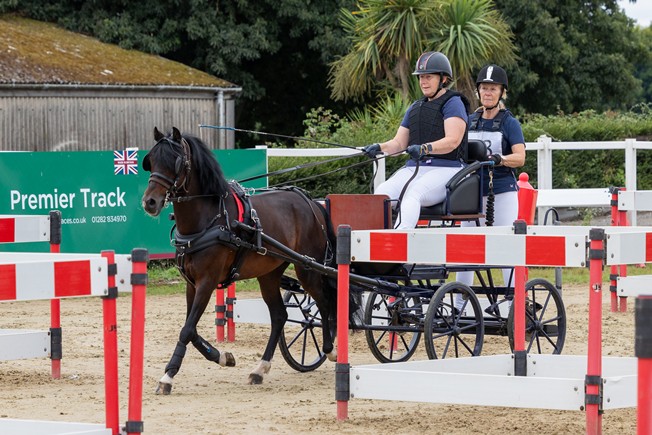
At the same time, experienced British technical delegates Paul Mills and Martin Wilkinson led a session for international TDs and reported afterwards that it went well. There’s talk of devising some new ‘difficulties’ which will be a welcome development.
A quick lunch followed, then many of us made a dash to Frankfurt airport for journeys home, the furthest travelled delegates being David & Cindy Remley, David Saunders and Dr Tom Burgess from the USA. It was somewhat chaotic at Frankfurt as the passport officers admitted ‘teething trouble’ with the new non-Schengen nations’ border requirements and their new computers which were painfully slow. But it didn’t detract from what had been another happy and informative AIAT weekend where like-minded driving enthusiasts met, chatted and planned.